What the Camera Shows Before We Recommend Anything
- Root intrusion at joints — and how much of the bore it takes
- Grease and soap buildup thickness on the pipe wall
- Scale narrowing in cast iron, bellies holding standing water, offset joints
A cable opens a hole through a blockage. Cleaning restores the pipe wall itself. If your line was "fixed" a few months ago and is slowing down again, this page explains why — and what a real cleaning visit includes.
Clearing a sewer means opening a path through a blockage so water moves again — usually one cable pass that punches through the middle of the obstruction. Sewer cleaning means removing the buildup from the pipe wall itself — grease, scale, and root mass — so the line's full diameter carries flow again. Cleared lines reclog in weeks because the wall buildup that caught the debris is still there; cleaned lines stay open because the catching surface is gone.
Grease is the clearest example. A cable through a grease blockage leaves a tunnel through soft buildup, and the rough grease wall starts catching food solids and wipes the same day. Roots behave the same way: a cutter trims roots at the joint, but the root mass at the pipe wall remains and regrows into the opening — often faster than the first time, because the cut ends branch.
Scale in cast iron is the third version of the same story. Decades of corrosion narrow the pipe and leave a surface like sandpaper. Snaking restores flow for a while, but the narrowed, rough bore keeps slowing waste until the line is descaled back toward its original diameter.
Tell us how often the line slows down, what the last service actually did (cable, jet, camera), and whether you have any footage or records. A line cleared three times in two years is a cleaning conversation, not a fourth clearing.
Call with the detailsCable clearing — snaking or rooter work — is the right tool for opening a blocked line quickly and for cutting roots at a joint. It is a clearing method: it restores flow, not the pipe wall, and on grease or soft buildup it can leave most of the problem in place.
Hydro jetting uses high-pressure water with purpose-built nozzles to scour the pipe wall; grease, soap, and sediment are stripped off and flushed toward the city main. It is the cleaning method for grease-heavy kitchen and restaurant lines and for lines that reclog after cabling. On older clay or fragile lines, pressure and nozzle choice are set from what the camera shows first — the hydro jetting page covers the method in full.
Descaling uses a chain-knocker head to knock corrosion scale off cast iron walls, restoring diameter in 1950s–70s Bellevue mains and downtown commercial stacks. It is slower, deliberate work, verified with camera passes between stages.
Bellevue's housing stock stacks the causes. Postwar clay and concrete laterals in Lake Hills and Crossroads crack at the joints and invite roots from the mature cedar and fir lots of Bridle Trails, Somerset, and Woodridge. Cast iron in older homes and Factoria commercial buildings scales from the inside. Each cause has a cleaning method and an interval — a generic "annual drain service" answers none of them.
Price turns on access (a ground-level cleanout vs. pulling a toilet), line length and diameter, the method the camera evidence supports, and how much buildup comes out. Published Bellevue-area ranges put standard drain cleaning around $200–$600 and hydro jetting around $500–$700; descaling is quoted by the line. Your exact price is confirmed before work starts — never after.
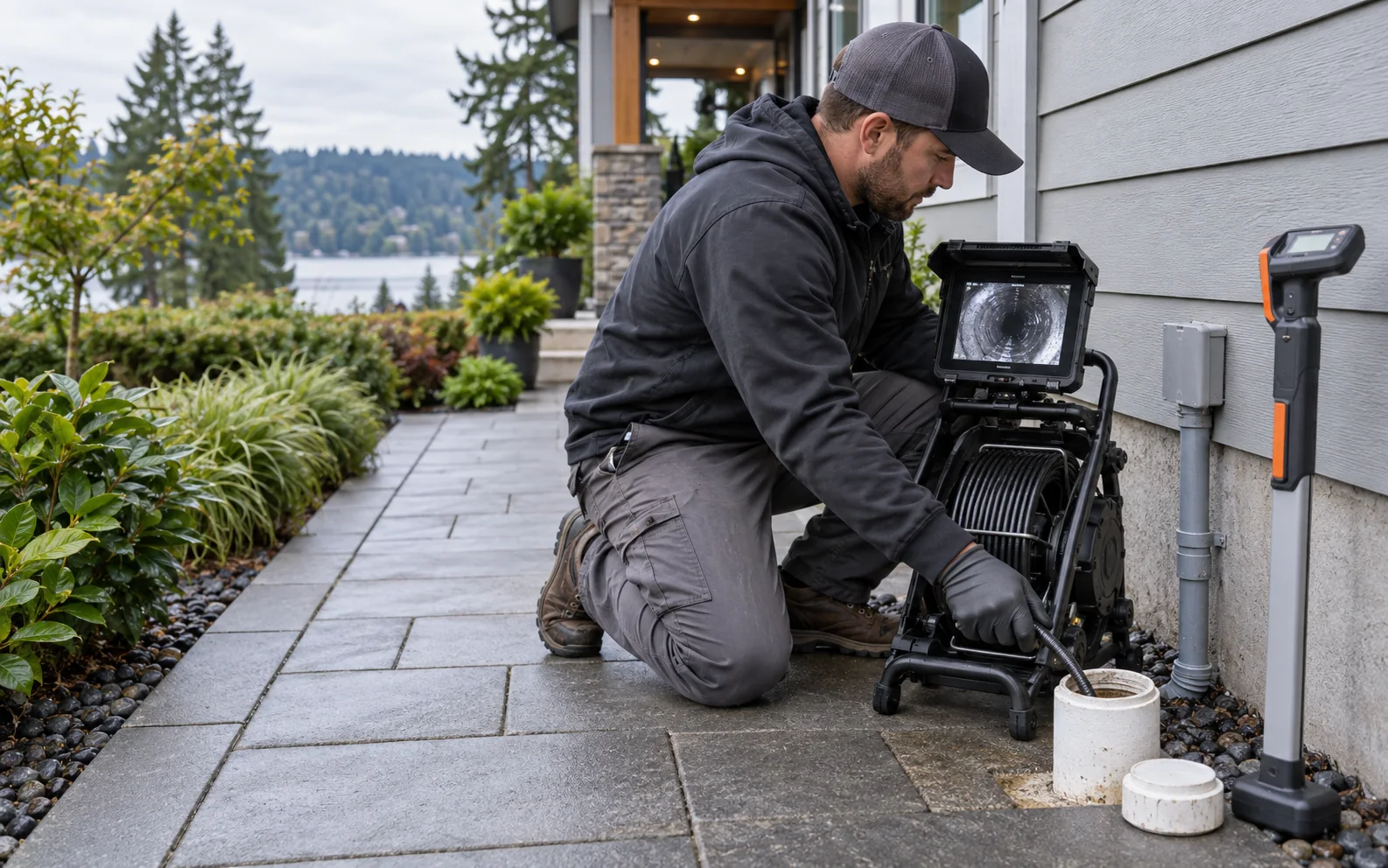
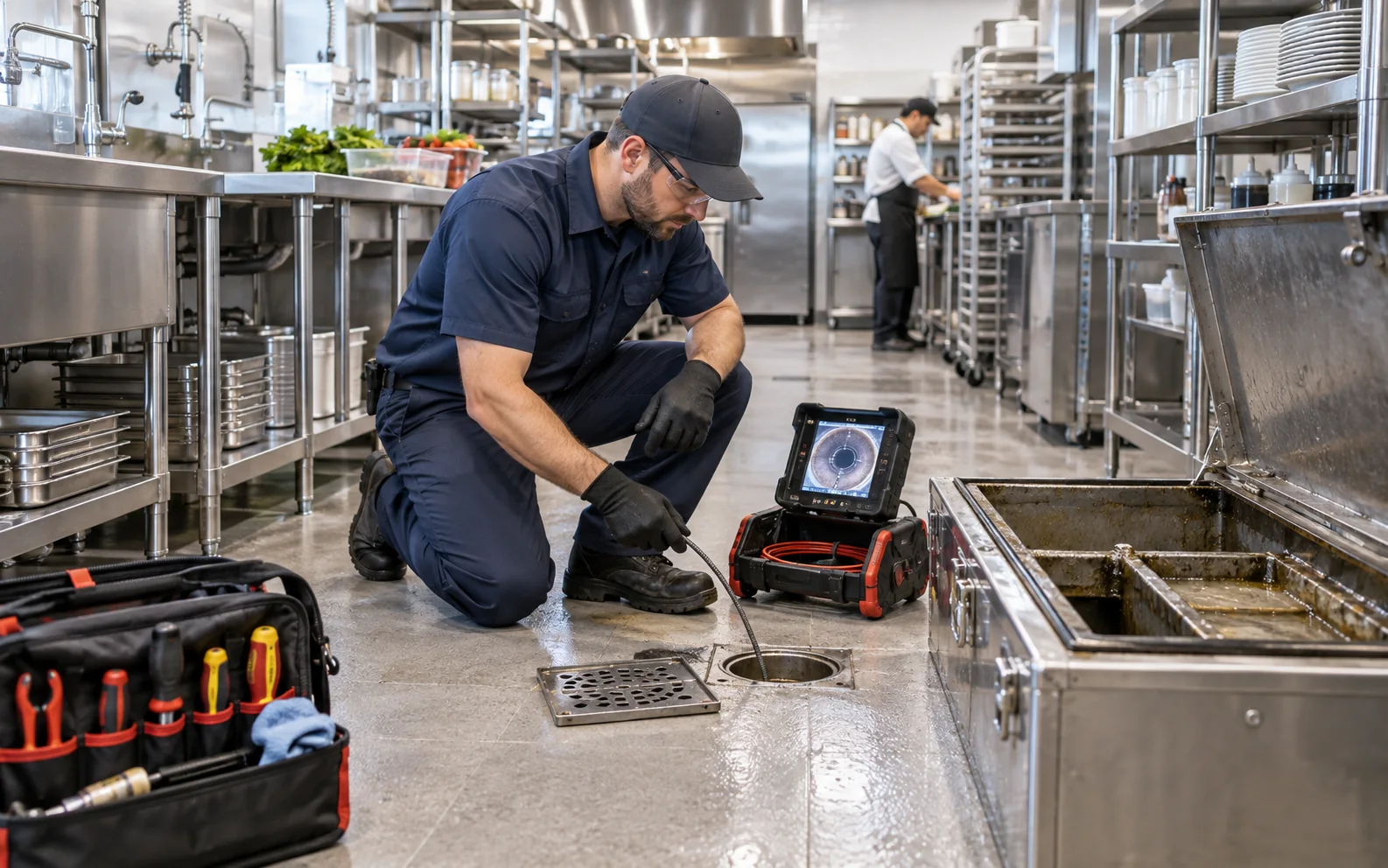
The visit starts with the camera, not the jetter. We inspect the line, show you what is on the wall — roots, grease, scale, a belly — and name the method that matches it. Cleaning follows, then a second camera pass verifies the wall, not just the flow.
Access is through your cleanout when one exists; when it does not, we say what the alternative is (a pulled toilet or a roof vent) and what it changes about the job before starting. Debris is flushed to the city main, and the line is left running full-bore. For restaurants and other commercial lines in Downtown and Factoria, the same visit sets a cadence — see commercial drain cleaning.
If fixtures are backing up right now, start with the blockage page; this page covers the deeper cleaning that follows.
"Sewer cleaning" and "sewer line cleaning" are the same search in Bellevue — people use both, plus "sewage line cleaning," for one job: restoring the whole line, not poking a hole in a clog. This page covers both phrasings deliberately, so one strong page answers one intent instead of two thin pages competing for it.
The related searches that belong elsewhere: a line that is blocked right now belongs on the main sewer line cleaning page, and every service is listed on the services hub. Questions about a specific line can be sent ahead through the contact page.
Slow drains that return on a cycle, gurgling after the washer drains, sewer odor near the cleanout, and a history of "cleared it last year" are cleaning signals. A single first-time clog in one fixture usually is not — that is a clearing job.
The main sewer line cleaning page is about the blockage happening now: multiple fixtures down, water coming up, the urgent job of getting the line open. This page is about what happens next — the depth and method of cleaning that keeps the line open, and the maintenance rhythm that follows from what the camera found.
We do not recommend jetting, descaling, or an interval from a symptom description alone. The camera separates roots from grease from scale from a structural belly — four causes with four different correct responses — and the footage is yours to keep for records or a future home sale.
A healthy PVC line may never need scheduled cleaning. A root-touched clay lateral in Somerset needs eyes on it every year or two. A restaurant line needs a grease cadence measured in months. The interval is written from your line's evidence at the end of the visit — not sold as a blanket plan.
These views match the inspection and cleaning work that shapes a sewer cleaning visit in Bellevue.
The map provides local contact context for Bellevue Rapid Drain. It does not determine boundaries, responsibility, response time, or serviceability.
Clearing opens a path through a blockage — one cable pass that punches through the middle so water moves again. Cleaning removes the buildup from the pipe wall itself: grease, scale, and root mass are stripped or jetted away so the full diameter carries flow. Clearing is the emergency step; cleaning is what keeps the line from reclogging weeks later.
Because the wall buildup that caught the debris was still there. A cable leaves a tunnel through grease, trims roots at the joint while leaving the root mass, and does nothing to cast iron scale. The rough, narrowed surface starts catching material immediately. A cleaning visit removes that catching surface — which is why the same line stays open far longer afterward.
When the camera shows wall problems rather than a single obstruction: grease coating the bore, recurring root growth at multiple joints, or scale narrowing a cast iron line. Jetting is the answer for grease and soft buildup; descaling is the answer for cast iron corrosion. If the line has been cabled twice in a year for the same symptom, the third visit should be a cleaning conversation.
By cause, not by calendar. Root-affected clay or concrete laterals typically need attention every one to two years, verified on camera. Grease-heavy homes and restaurant lines can need cleaning every three to six months. A healthy line with no camera findings does not need scheduled cleaning at all — we will tell you that plainly rather than sell a plan.
Where the buildup sits and what it is: root intrusion at joints and how much of the bore it takes, grease thickness, scale in cast iron, bellies holding standing water, and offset or cracked sections. Each finding maps to a different response — jetting, descaling, a cleaning interval, or a repair conversation. You see the footage, and it is yours to keep.
Main sewer line cleaning is the blockage job: multiple fixtures backing up now, the line opened and flowing again. Sewer cleaning is the depth job on the same line — restoring the pipe wall and setting the maintenance rhythm that prevents the next blockage. Many visits need both in sequence: open the line first, then clean it properly while the equipment is there.
It depends on access, line length and diameter, and the method the camera supports. Published Bellevue-area ranges put standard drain cleaning around $200-$600 and hydro jetting around $500-$700, with descaling quoted by the line. Those are market ranges, not a quote — your exact price is confirmed before any work starts, and if the camera shows cleaning is not needed, we say so.
Tell us how often the line slows down, what the last visit actually did, and whether a camera has been in the line — that decides whether this is a clearing, a cleaning, or a camera visit first.
Contact Bellevue Rapid Drain