Sewage in the house is a health problem first and a cleaning job second. Stop running water, keep people and pets out of the affected rooms, and read what happens in the first 30 minutes — and what real cleanup involves — before anyone starts mopping.
The Straight Answer on Sewage Cleanup
Sewage cleanup is the removal of contaminated water and material after a sewer or drain backup, followed by disinfection and drying of everything the water touched. Raw sewage is Category 3 "black" water — the most contaminated class — so porous materials it soaks, like carpet pad and drywall, usually cannot be disinfected and must come out. Cleanup that ignores the blocked line is unfinished work, because the backup will return; the line has to be cleared and camera-checked as part of the same response.
The First 30 Minutes After a Sewage Backup
What you do before anyone arrives matters more than any product under the sink. Sewage keeps spreading as long as water keeps moving, and every flush or laundry cycle upstairs adds to what comes up through the lowest drain downstairs.
Stop all water use in the home — no flushing, laundry, showers, or dishwasher cycles
Keep children and pets out of the affected rooms, and wear shoes you can leave at the door of the area
Do not touch electrical outlets, cords, or appliances standing in sewage
If it is safe to reach, close HVAC vents in the affected area so the system does not pull contaminated air through the house
Photograph and video every affected room before anything is moved or cleaned — insurers ask for this
Do not start tearing out carpet or running fans yet. Fans pointed at contaminated surfaces spread droplets, and removing material before it is documented can complicate an insurance claim. Extraction and containment come first.
What to Share for Sewage Cleanup
Tell us which fixture or floor drain backed up first, which rooms are affected and what flooring they have, and whether the water is still rising. That decides the equipment on the truck and whether the line crew and the cleanup crew arrive together.
Sewage is classified as Category 3 water — the category reserved for grossly contaminated water. It carries bacteria and viruses from the sanitary system, and in a Bellevue side sewer it can also carry whatever the line picked up on the way: grease, soil water, and debris from a bellied or root-cracked lateral. The risk is contact and what stays behind in materials, not just the smell.
Porous materials are the dividing line. Carpet pad, soaked drywall and insulation, particle-board cabinet bases, and upholstered furniture absorb contaminated water below the surface, where disinfectant cannot reliably reach. Those materials are removed and disposed of, not cleaned in place. Hard, non-porous surfaces — sealed tile, concrete, metal — can be cleaned and disinfected.
Questions That Shape a Sewage Cleanup Visit
Which rooms and materials did the water reach?
Is anyone in the home very young, elderly, pregnant, or immune-compromised?
Has the cause been found, or is the line still blocked?
Why it matters
Why Sewage Cleanup Matters for Bellevue Properties
Bellevue backups often surface in finished basements and lower-level bathrooms — the rooms built directly over the side sewer's path out of the house. In postwar homes in Lake Hills and Crossroads, the line leaving the house is clay or concrete of the same age as the home, and a backup there tends to be a line problem announcing itself, not a one-off accident.
What Professional Cleanup Involves, Step by Step
Extract standing sewage and contaminated water
Remove unsalvageable porous material and bag it for disposal
Clean and disinfect the hard surfaces that remain
Dry the structure and check moisture readings before anything is closed up
Dispose of contaminated material under local rules
The Cause Has to Be Fixed Too
A backup means the side sewer or a main line stopped moving waste. If the line is not cleared and inspected with a camera, the next heavy use — or the next hard Bellevue rain on a root-cracked lateral — brings the same water back into the same rooms. Cleanup and line work are one job.
What You Can Hand Your Insurer
We document the affected rooms with photos, note moisture readings, and itemize the work and the materials removed on the invoice — documentation you can give your insurer. Whether a policy covers a sewer backup is the insurer's call; what we control is making the record complete.
Next steps
Sewage Cleanup Next Steps in Bellevue
Call while the water is still contained if you can. The order that works is: stop the source, extract, remove what cannot be saved, disinfect, dry, and confirm the line runs clear — with the camera in the line before anyone calls the job done.
Bellevue Rapid Drain works from 1633 151st Ave SE in Bellevue, so response starts inside the city rather than across the lake. If the water surfaced through a floor drain first, say so — that points at the main line rather than a single fixture, and the floor drain cleaning page covers how that pattern is read.
Stop water use and keep the area clear
Photograph every affected room before cleanup
Keep the insurance policy number with the photos
Related Bellevue Drain Services
Sewage cleanup connects to the line work that prevents a repeat — start with the page that matches your situation.
Most calls start with "sewer backup cleanup" or "sewage backup in the basement" rather than the service name. Homeowners search sewage cleanup Bellevue when water has already come up through a floor drain, a basement toilet, or a shower on the lowest level of the house.
However you describe it — sewage smell in the house, a basement backup after heavy rain, or a floor drain that surfaced during laundry — the facts that matter are the same: where it came up, what it touched, and whether the line is still blocked. Every drain service is listed on the services hub, and if the situation is stable, written details can be sent through the contact page instead of a call.
Service guidance
Choose the Right Sewage Cleanup Path in Bellevue
Signs It Is a Health-First Job, Not a Mopping Job
Any sewage that reaches carpet, drywall, or a finished living space is beyond household cleaning. The same is true when the smell persists after surfaces look dry — odor usually means contaminated material is still in place behind or under what you can see.
Cleanup Without the Line Fix Is Half a Job
Extraction and disinfection make the room safe today. Clearing the line and running a camera decide whether it stays that way. Roots in a clay lateral in Bridle Trails or a bellied concrete line in Lake Hills will re-block on their own schedule, not yours.
What Gets Removed and What Can Stay
Carpet pad almost never stays; carpet itself depends on how long sewage sat and what it is made of. Sealed tile, concrete, and solid surfaces that were only wet on top can usually be cleaned and disinfected. Nothing salvageable should be torn out on a guess — each material gets a call before it is removed.
When the Home Is Safe Again
Rooms are safe when contaminated material is out, hard surfaces are disinfected, and moisture readings show the structure is dry — not when the smell fades. Drying under flooring and inside wall bases is the part most often skipped, and the part that decides whether odors and microbial growth return.
Service intent
Details That Guide Your Sewage Cleanup Visit
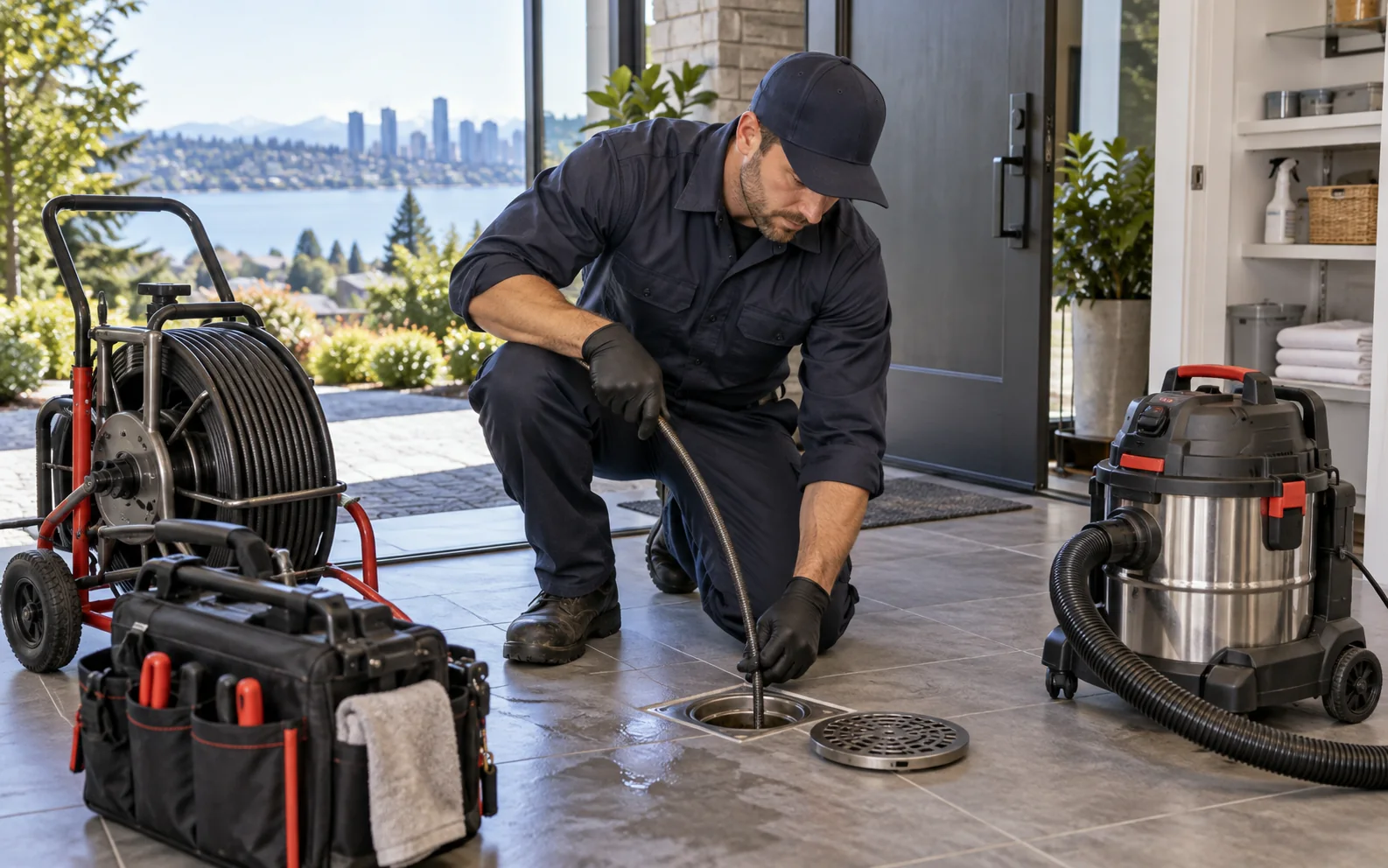
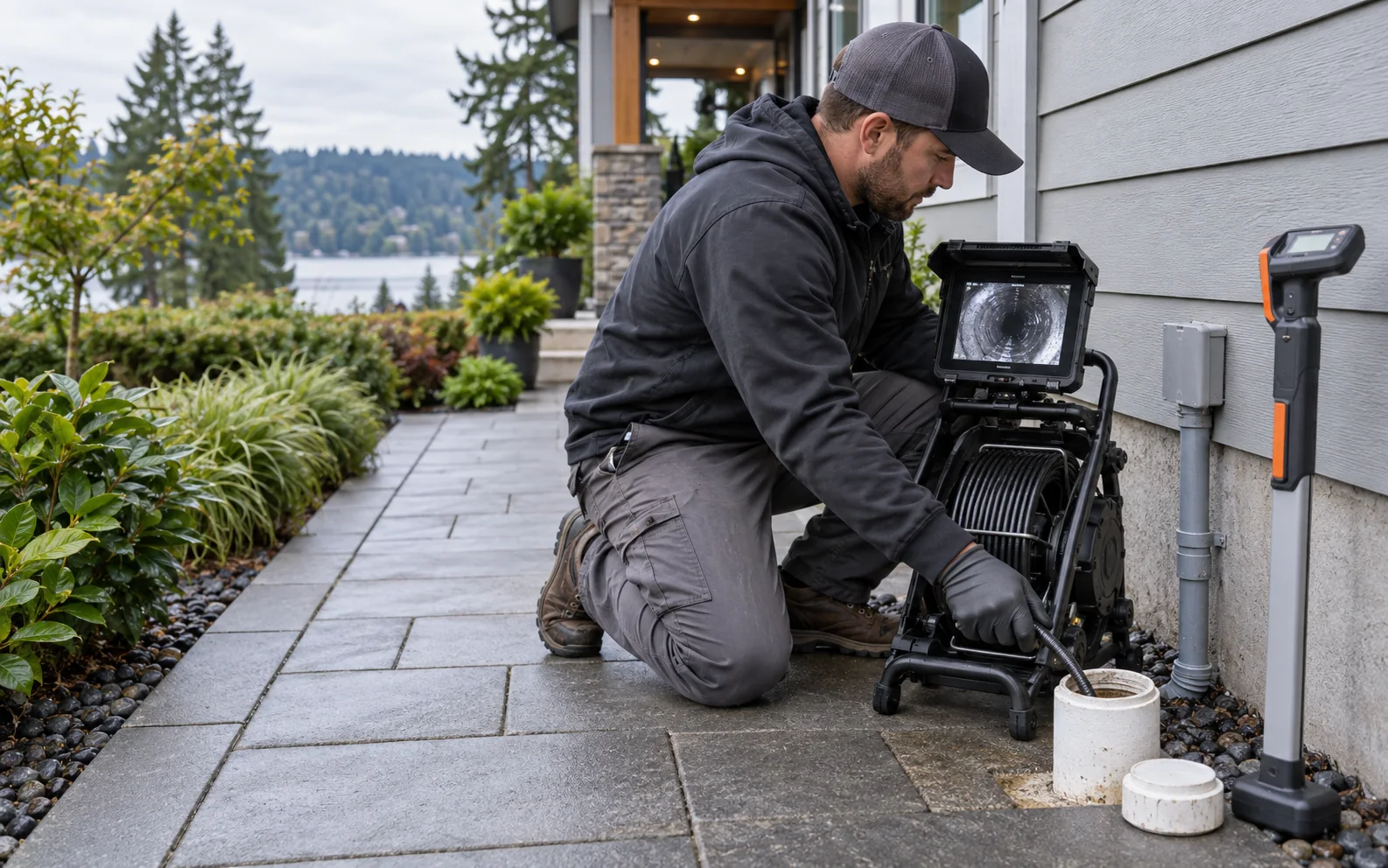
These views match the equipment and line checks that shape a sewage cleanup visit in Bellevue.
Extraction and line equipment arrive together when the cause is still activeA camera pass confirms the blockage is gone before rooms are dried and closed
Bellevue location context
Sewage Cleanup Service Area in Bellevue, WA
The map provides local contact context for Bellevue Rapid Drain. It does not determine boundaries, responsibility, response time, or serviceability.
Address on file1633 151st Ave SE Bellevue, WA 98007
What should I do in the first 30 minutes after a sewage backup?
Stop all water use — every flush, shower, and laundry cycle adds to what comes up through the lowest drain. Keep people and pets out of the affected rooms, and do not touch outlets, cords, or appliances standing in sewage. If it is safe, close HVAC vents in the area. Then photograph and video everything before anything is moved; insurers ask for that record.
Is sewage in the house actually a health hazard?
Yes. Sewage is Category 3, or black, water — the most contaminated category — and it carries bacteria and viruses from the sanitary system. The hazard is not only the visible water; contaminated moisture stays inside carpet pad, drywall, and insulation after surfaces look dry. That is why affected porous materials are removed and why children, pets, and anyone immune-compromised should stay out until cleanup is complete.
What does professional sewage cleanup involve, step by step?
First the cause is stopped and standing sewage is extracted. Unsalvageable porous material — carpet pad, soaked drywall, insulation — is removed and bagged for disposal under local rules. Hard surfaces are cleaned and disinfected, then the structure is dried and checked with moisture readings. Finally the line itself is cleared and camera-checked, because cleanup over a still-blocked line does not hold.
Can carpet and furniture be saved after a sewage backup?
Carpet pad cannot — it holds contaminated water below disinfectant's reach and is always removed. Carpet and upholstered furniture depend on the material, how long sewage sat, and how deep it soaked; in many Category 3 cases they are removed too. Sealed tile, concrete, and metal clean and disinfect reliably. We tell you which category each item falls into before anything is torn out.
Do you fix the cause of the backup, or only clean up?
Both. A backup means the line stopped moving waste — roots in a clay lateral, a belly in a concrete side sewer, grease, or a collapsed section. We clear the line and run a camera so the cause is identified and documented. Cleaning the rooms without clearing and inspecting the line leaves the next backup already scheduled.
Will insurance cover it, and what documentation do you provide?
Coverage depends on your policy and whether it includes sewer backup — that decision is your insurer's, and we will not promise it. What we provide is the record insurers ask for: before-and-after photos, moisture readings, and an itemized invoice showing the work done and materials removed. Photograph the rooms yourself before cleanup starts as well; that first record matters.
How fast can you respond in Bellevue, and when is the home safe again?
We work from 1633 151st Ave SE in Bellevue, so response starts inside the city; call (425) 264-4094 and current availability is confirmed on the call. Rooms are safe again when contaminated material is out, hard surfaces are disinfected, moisture readings show the structure is dry, and the line runs clear on camera — not simply when the smell fades.
Get Sewage Cleanup Help in Bellevue
Tell us where the sewage came up, which rooms it reached, and whether water use has stopped — that shapes the first hour of the visit.