
Downtown and Old Bellevue
Towers and newer mixed-use buildings run modern systems but at high fixture counts; Main Street's older restaurant row runs original lines under heavy grease load. Both fail — one by volume, one by age.
Commercial drain cleaning in Bellevue keeps restaurants, retail, offices, and multi-tenant properties open: grease-loaded kitchen lines, floor drains, and restroom branches cleaned on a schedule built around your operating hours — and documented when it is done.
A slow drain in a Bellevue restaurant, café, salon, or medical office is not a maintenance nuisance — it is a closing-time risk. A floor drain that surfaces during dinner service, a three-compartment sink that will not empty, a restroom line that backs up on a Saturday: each one can shut down operations and, in food service, draw health-inspection attention on the spot. Commercial drain cleaning handles the systems homes do not have — floor drains and trench drains, grease-loaded kitchen lines, multi-fixture restroom branches, parking and loading-area drainage — on a schedule built around your operating hours, with the work documented for whoever manages the property.
Nearly every commercial drain emergency started as a line that slowed down over months. A maintenance cycle — jetting the grease lines, servicing the trap, checking the floor drains — costs a fraction of one closed evening, and it produces the service records that property managers and inspectors ask for.
Call with the detailsIt starts with a walk-through: every drain on the property gets located, tested, and noted, and the problem lines get a camera look so the plan rests on pipe condition, not habit. Cleaning is then scheduled outside your peak hours — early mornings, closed days, or between services — and scoped line by line: cable clearing where a single blockage is the story, hydro jetting where grease coats the run, trap service where the interceptor is due. Multi-tenant properties in Factoria, BelRed, Crossroads, and Downtown get a per-space access plan so tenants know when water will be off in their unit and for how long. You receive a written record of what was done, what the camera saw, and what is recommended next — the document a landlord, franchisor, or health inspector actually wants.
Commercial scope is quoted per property after the walk-through, because a café's two lines and a grocery's twenty drains are different jobs wearing the same name. The underlying work uses the same published ranges as residential service — main line clearing typically about $250–$500, hydro jetting about $500–$700 per line, camera inspection about $300–$400 — assembled into a property quote with no blended padding. Maintenance agreements price the cycle, not the emergency.
Bellevue's commercial stock ranges from Downtown towers to 1970s strip centers, and the drainage problems follow the building stock.
Towers and newer mixed-use buildings run modern systems but at high fixture counts; Main Street's older restaurant row runs original lines under heavy grease load. Both fail — one by volume, one by age.
Retail centers, auto services, and light-industrial spaces: floor drains, wash bays, and parking drainage, often on shared lines where one tenant's problem becomes every tenant's backup.
Some of the Eastside's most diverse restaurant corridors, plus 1970s–80s strip retail. Grease management — traps, jetting cycles, staff habits — is the whole game here.
Send the property type, the drain inventory if you know it, and the problem history. A short walk-through turns that into a scoped plan with scheduling around your hours.
Commercial programs typically combine these three services:
Dates, lines serviced, method used, camera findings, and the recommended next interval — that is the whole document, and it is what separates a maintained property from a lucky one when an inspector or a buyer asks. If your property has a line that has been "handled" repeatedly without records, start with a camera inspection and a baseline report; every later decision gets cheaper and easier from there. For grease-heavy kitchens, pair this with a grease trap schedule so the trap and the lines behind it are serviced as one system.
A single floor drain or sink line misbehaving gets a targeted clearing visit, scheduled around service where possible, with a note on cause.
The line that closes the kitchen twice a year gets a camera, a diagnosis, and a place on a jetting or maintenance cycle instead of another emergency call.
Taking over a restaurant or retail space? A baseline drain survey before opening documents what you inherited — cheap insurance in any later dispute about pre-existing condition.
Centers and multi-tenant properties get a per-space plan, one schedule, and one record set for the manager. Predictable cost instead of episodic emergencies.
These views match the kind of fixture, line, outdoor feature, or operating context that can change the first conversation for commercial drain cleaning.
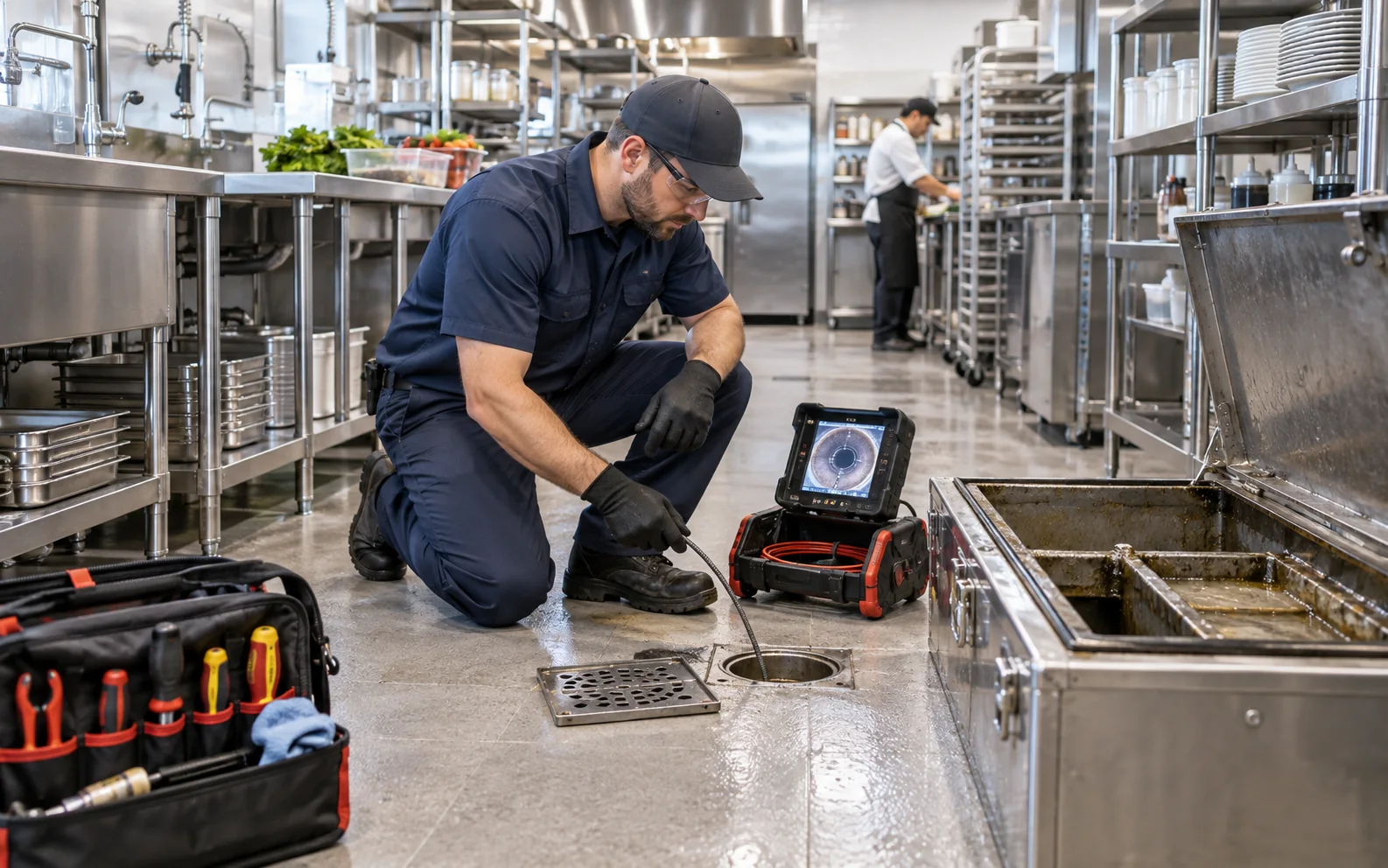
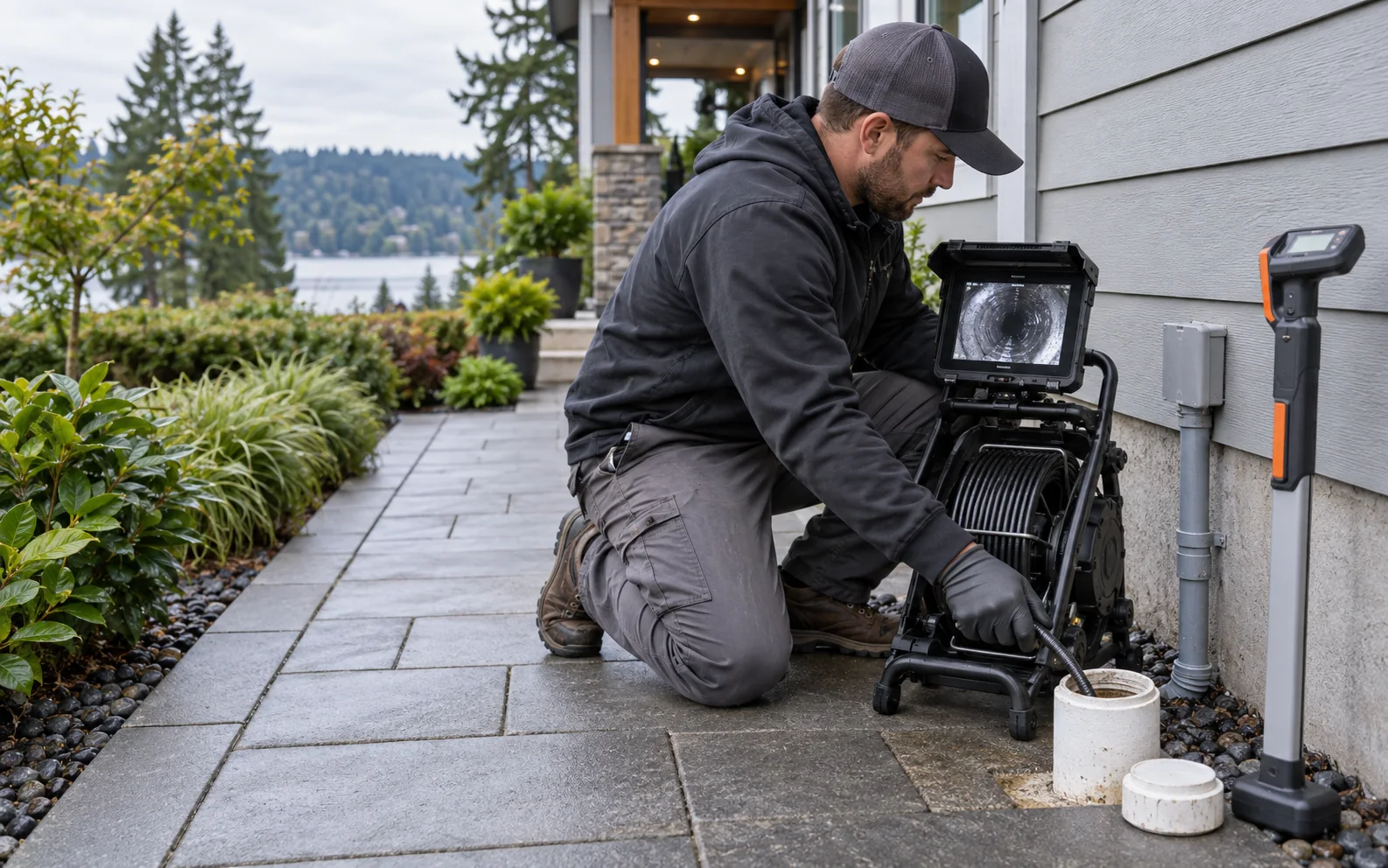
The map provides local contact context for Bellevue Rapid Drain. It does not determine boundaries, responsibility, response time, or serviceability.
Yes — scheduling around operating hours is a standard part of commercial service: early mornings, closed days, or between services. The walk-through establishes which lines need water off, and for how long, so tenants and staff can plan.
It is quoted per property after a walk-through, because scope varies from two lines to twenty. The underlying work follows the same published ranges as residential service — main line clearing about $250–$500, hydro jetting about $500–$700 per line, camera inspection about $300–$400.
Yes. Each service produces a written record: lines serviced, methods used, camera findings, and the recommended next interval. That record is what health inspectors, landlords, and franchisors ask to see.
A scheduled cycle matched to your lines: jetting for grease runs, trap service coordination, floor drain checks, and priority response when something misbehaves between visits — all documented per visit.
Because clearing treats the blockage, not the cause. A camera inspection usually finds one of three things: grease re-coating faster than the clearing cycle, a sagging or damaged section, or a trap that is undersized or overdue. Each has a different fix.
Share the property type, your hours, and the problem lines — a walk-through turns that into a scoped, scheduled plan.
Contact Bellevue Rapid Drain