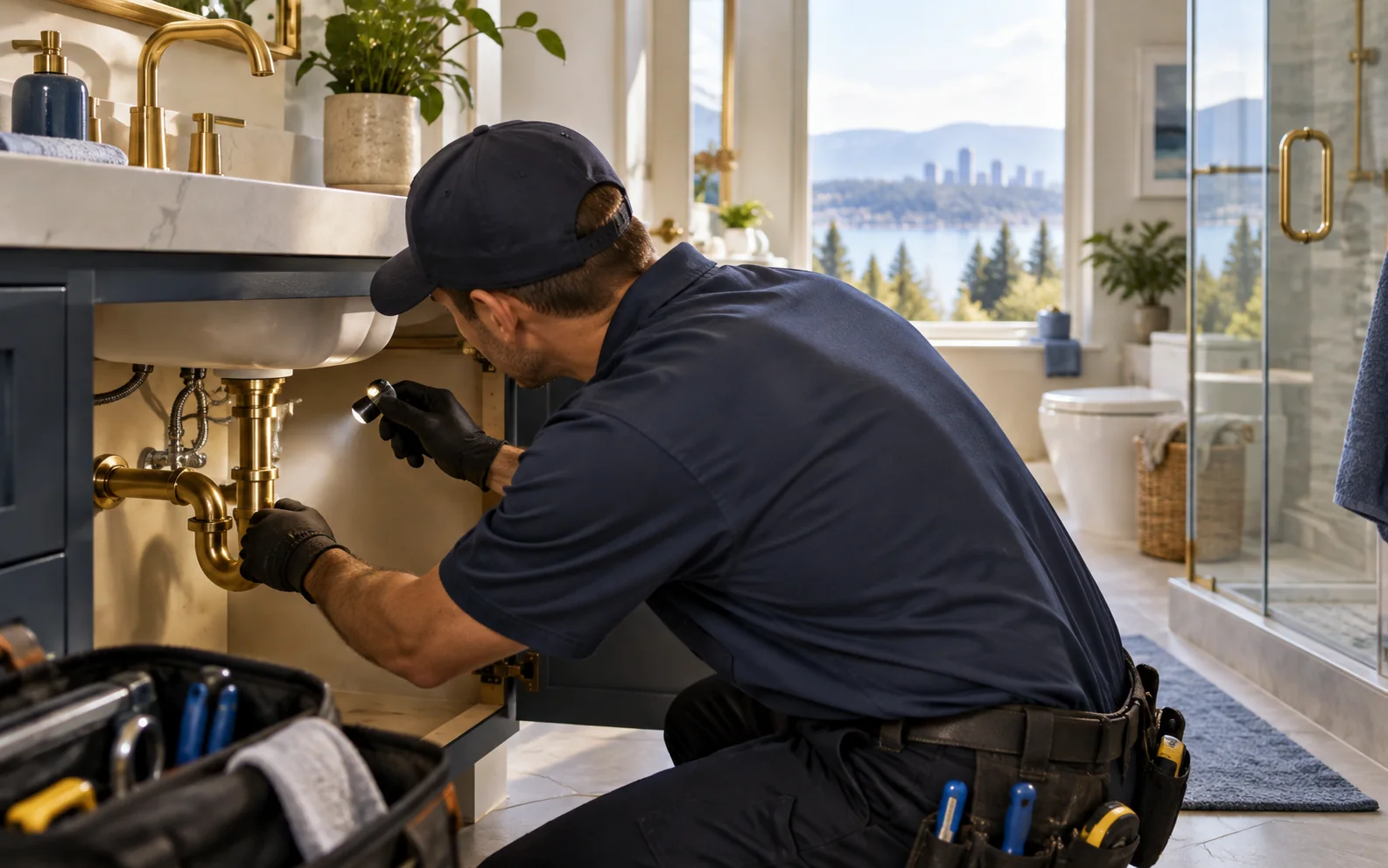
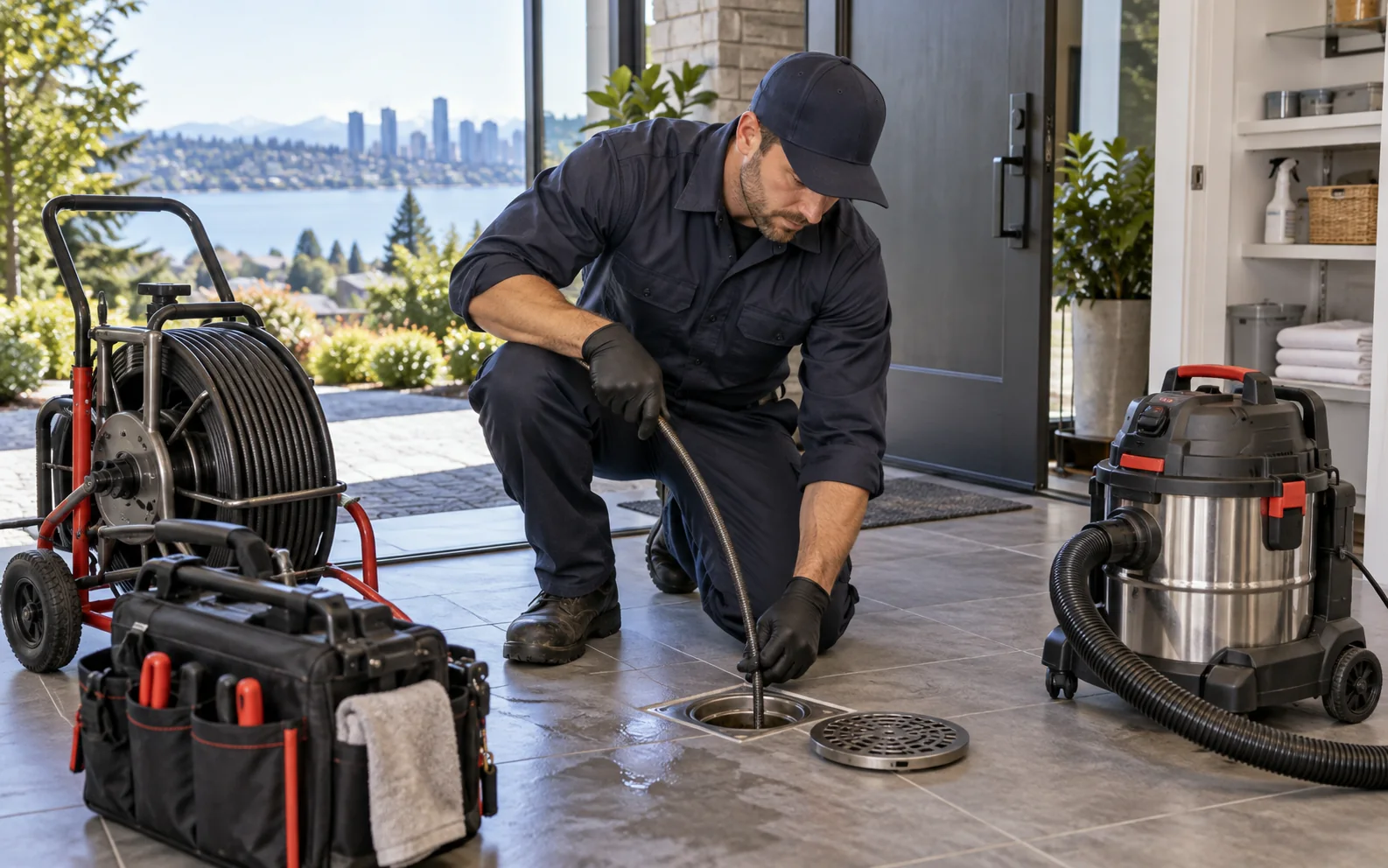
A clogged toilet in Bellevue usually clears with a closet auger in one visit — unless the toilet is only the first sign of a blockage further down the line. The visit starts by separating those two problems, because they have completely different fixes.
Why a Clogged Toilet Usually Is Not the Toilet
Most clogged toilets in Bellevue clear with an auger in a single visit: the obstruction sits in the toilet's own trap or just past it in the branch line, and a closet auger reaches it without scratching the porcelain the way a general snake can. The cases that matter more are the ones where the toilet is the messenger. If the tub gurgles when the toilet flushes, if a second fixture backs up at the same time, or if the same toilet clogs every few weeks with normal use, the blockage is probably downstream in the shared line — and clearing the toilet alone will only buy a few weeks. A single-fixture clearing in Bellevue typically runs about $150–$300; the first job of the visit is deciding whether that is really the problem you have.
What Causes Toilets to Keep Clogging
"flushable" wipes, paper towels, and hygiene products that do not break down
objects dropped in by kids — toys, toothbrushes, bottle caps
heavy paper use in a low-flow toilet with a weak flush
scale and buildup narrowing an older toilet's internal passages
roots or a partial blockage downstream that only shows at the toilet first
The City of Bellevue's Rule Is Short
Bellevue's utilities department publishes the same short list: sewers are designed for water, toilet paper, and human waste — nothing else. Wipes are the single most common cause of repeat toilet clogs we would expect in any Bellevue home, including the ones labeled flushable.
The visit starts with a flush test and a look at the neighboring fixtures. If only the toilet is affected, a closet auger clears the trap and the first few feet of branch line. When the auger meets something solid that will not break up — the classic dropped object — the toilet may need to be lifted so the obstruction can be removed from below; that also exposes the flange and wax ring, which are replaced when the toilet goes back down. If other fixtures react during testing, the scope changes on the spot: the toilet comes off the list and the main line goes on it. Our guide to telling one fixture from a main-line clog walks through the same tests you can run before calling.
What to Try, and What to Skip, Before Calling
A proper flange plunger — not the small cup style meant for sinks — is worth ten minutes. Seal it over the bowl outlet and push water, not air. If two or three attempts change nothing, stop: repeated flushing only raises the water level and the risk of an overflow. Skip chemical drain cleaners entirely. They do not dissolve wipe or object blockages, they sit in the bowl as a hazard, and they have to be disclosed before anyone works on the line.
Why it matters
Why Toilet Clogs Deserve a Real Diagnosis in Bellevue
A toilet is the largest drain opening in the house, connected straight to the biggest branch line. It is often the first fixture to show a problem that actually lives further down the system.
Repeat Clogs on a Schedule
A toilet that clogs every few weeks with ordinary use is rarely a paper problem. Partial downstream restrictions — scale, a sagging section, early root intrusion — slow the line until the toilet, with the weakest flush margin, shows it first.
Older Toilets and Low-Flow Retrofits
Bellevue homes from the 1960s–80s often pair original branch lines with newer low-flow toilets. Less water per flush moves solids less forcefully, so marginal lines clog at the toilet. The fix may be the line, not another toilet.
Rental and Multi-Bath Homes
In rentals and multi-bath homes, note which toilet clogs and whether others share the pattern. One toilet on one branch is a fixture job; several across the house is a clogged drain pattern pointing downstream.
Next steps
Clogged Toilet Next Steps in Bellevue
Before you call, run the two quick checks: flush the toilet and watch the tub or shower drain for bubbles, then run the nearest sink and listen at the toilet bowl. Those two observations separate most fixture clogs from line problems.
Say whether anything else gurgles, bubbles, or backs up
Mention anything that may have been dropped in
Note how often it clogs and what plunging achieves
Stop flushing a toilet that is close to overflowing
Related Bellevue Drain Services
If the toilet turns out to be a symptom, these are the services the diagnosis usually leads to:
Bellevue's postwar homes in neighborhoods like Lake Hills and Eastgate still run many original branch lines, and clay or concrete laterals sit under mature cedar and fir trees across the city. That combination explains the two patterns behind most repeat calls: buildup in aging pipe, and roots entering at lateral joints. Neither shows up as a dramatic single blockage — both announce themselves as a toilet that clogs a little more often each season. A camera inspection of the lateral (about $300–$400) settles which pattern you have before money goes to repeat clearing visits.
Service guidance
Choose the Right Path for a Clogged Toilet in Bellevue
When It Is Just the Toilet
One toilet, everything else draining normally, and a known cause — excess paper or a dropped object. That is an auger visit, usually cleared the same day the call comes in.
When It Is the Main Line
Bubbling in the tub, a second fixture backing up, or sewage at a floor drain. Skip the toilet work and start with the main sewer line — clearing the fixture cannot hold.
Plunging vs Augering
A plunger moves water against soft blockages near the trap. A closet auger reaches through the trap into the branch and can retrieve or break up solid obstructions. If plunging fails twice, the auger is the next step — not chemicals.
Preventing the Next Clog
Keep wipes out even when the package says flushable, put a small lidded bin in bathrooms with kids, and treat a slowing flush as information. Recurring clogs that shorten in interval are a line asking for a camera, not another plunger.
Service intent
Details That Guide Your Clogged Toilet Repair Visit
These views match the kind of fixture, line, outdoor feature, or operating context that can change the first conversation for clogged toilet repair.
Start with the toilet symptom and what changed around itUseful context when a fixture issue is affecting the room
Bellevue location context
Clogged Toilet Repair Service Area in Bellevue, WA
The map provides local contact context for Bellevue Rapid Drain. It does not determine boundaries, responsibility, response time, or serviceability.
Address on file1633 151st Ave SE Bellevue, WA 98007
Repeat clogs usually mean a partial restriction: scale or buildup narrowing the line, a sagging section, or roots entering a lateral joint downstream. The toilet shows it first because it moves the most water at once. A camera inspection finds the actual cause.
Can a clogged toilet mean a sewer line problem?
Yes. If the tub or shower gurgles when you flush, if another fixture backs up at the same time, or if water appears at a floor drain, the blockage is in the shared main line — not the toilet. That is a main line cleaning job.
What should never be flushed?
Per the City of Bellevue, sewers are built for water, toilet paper, and human waste only. Wipes of every kind (including "flushable" ones), paper towels, hygiene products, dental floss, and cotton items are the usual clog sources.
How much does clogged toilet repair cost in Bellevue?
A single-fixture clearing in Bellevue typically runs about $150–$300. If testing shows the problem is in the main line instead, main line clearing typically runs about $250–$500. The scope is confirmed before work starts.
Will the toilet need to be removed?
Only when a solid object is lodged where the auger cannot retrieve it. Lifting the toilet also allows the flange and wax ring to be inspected and replaced, which solves many slow-leak and wobble problems at the same visit.
Get Clogged Toilet Help in Bellevue
Share what the other fixtures are doing, anything that may have been dropped in, and how often it clogs — those three facts aim the visit correctly.