One drain down is usually a local blockage, not a whole-house problem — until it starts repeating or pulling other fixtures in with it. Share which fixture stopped, how it changed, and whether it has happened before.
A clogged drain is usually a local blockage: grease coating a kitchen run, hair and soap scum packed at a bathroom stopper, or wipes caught in a toilet line. A cable (auger) pass clears most single-fixture clogs in one visit. It stops being a small job when two or more fixtures slow down together, drains gurgle, or the same drain keeps coming back: then the cause sits in the branch or main line, and the fix has to address it, not the symptom.
What You Can Safely Try First
Three checks are safe on almost any fixture and finish a surprising share of clogs — work through them before anything stronger.
Plunge correctly: cover the overflow, keep the cup sealed under water, and use short, sharp strokes
Run hot tap water slowly into a kitchen drain — it softens fresh grease near the trap
Lift the bathroom pop-up stopper and clear whatever hangs from its stem — this alone fixes many slow sinks
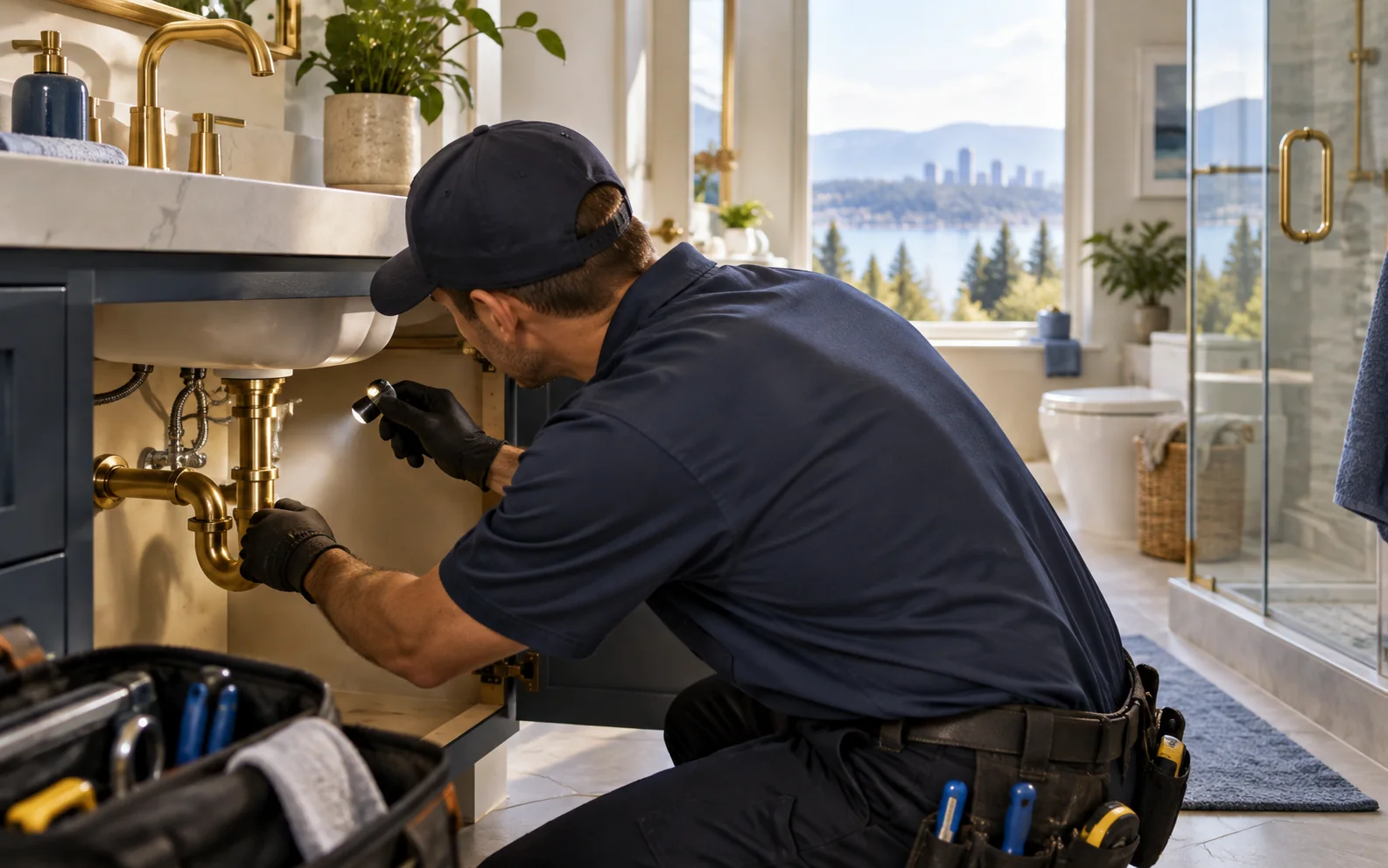
Bucket under the P-trap, hand-loosen the slip nuts, and empty and rinse the trap if you can reseat it
Three things to never do: pour chemical drain cleaner into a stopped drain (it rarely dissolves grease or hair, damages pipe and finishes, and leaves caustic water in the trap for whoever opens it next), pour boiling water into PVC or porcelain (heat softens PVC joints and can crack porcelain), or force a rented cable you cannot control (it can scratch fixtures, crack a trap, or wedge in the line).
When a Clog Stops Being a DIY Job
A plunger works on a blockage near the fixture. It cannot fix a pattern — and a pattern is what separates a small fix from a line problem. Stop and call when any of these show up:
The same drain clogs again within a few weeks of the last clearing
Two or more fixtures slow down, gurgle, or back up together
A toilet gurgles when a sink or tub drains
A sewer smell appears indoors and does not clear with use
Water shows up at a floor drain or the lowest fixture
Any one of these means the restriction is shared — branch line or main — and more plunging only moves dirty water around. That is main sewer line cleaning territory, not fixture work.
The Two-Fixture Rule
If one drain is slow, it is almost always that drain. If two drains change together, they share the problem — in a section deeper than either fixture. Note which two, and which changed first; that order tells a technician where to start.
A cable through a soft blockage punches a hole its own width and leaves the rest of the material on the pipe wall — the grease film in a kitchen line, the root fringe in an older lateral. Water runs again, but the layer that caused the clog is still there, still catching debris, and the drain closes again within weeks. Cleaning removes the layer itself: scouring the wall back to full pipe diameter, by jetting for grease or cutting and camera verification for roots.
For a first-time clog, clearing is usually the honest scope and the lower price. For a repeat clog, punching a second or third hole in the same buildup is the expensive option — camera first, then the method that matches the wall.
Causes
What Causes Clogs, Fixture by Fixture
The material follows the fixture, and the material decides the tool. This is what a cable brings back from each part of a Bellevue house.
Kitchen: Grease and Food Residue
Cooking fat cools on the pipe wall, layer over layer, until the opening narrows to a straw. Long horizontal kitchen runs — common in Lake Hills and Crossroads ranch layouts — give grease more cold pipe to coat. Coffee grounds and food scraps settle into the film and harden it. Detail: kitchen drain cleaning.
Bathroom: Hair and Soap Scum
Hair wraps around the stopper stem and crossbars a few inches below the drain, and soap scum and toothpaste glue it into a plug coating the P-trap. Tubs and showers collect the same mat over a wider strainer. Each bathroom fixture has its own trap and branch, so a clogged sink says nothing about the tub next to it — see bathroom drain cleaning.
Toilet and Laundry: Things That Never Break Down
Toilets clog on wipes — including flushable-labeled ones — cotton products, and dropped objects. Wipes do not disintegrate; they snag on the first rough joint and raft everything behind them. Laundry drains load up with lint and detergent sludge where the washer discharges through a shared standpipe. Toilet patterns: clogged toilet repair.
The visit
How a Technician Clears a Clogged Drain, Step by Step
The visit starts with questions, not equipment: which fixture stopped, how it changed, what you tried, and whether it has happened before. Neighbors get run to confirm the problem is local. Then the work follows a fixed order:
Assess the pattern — one fixture or several, first time or recurring, how it changed before it stopped
Cable (auger) the line through the trap or a cleanout, head sized to the pipe and material
Read what the cable brings back — grease, hair, wipes, root hairs, and scale each point to a different cause
Flush-test with a full volume of water, not a trickle, and watch the fixture take the whole basin without rising
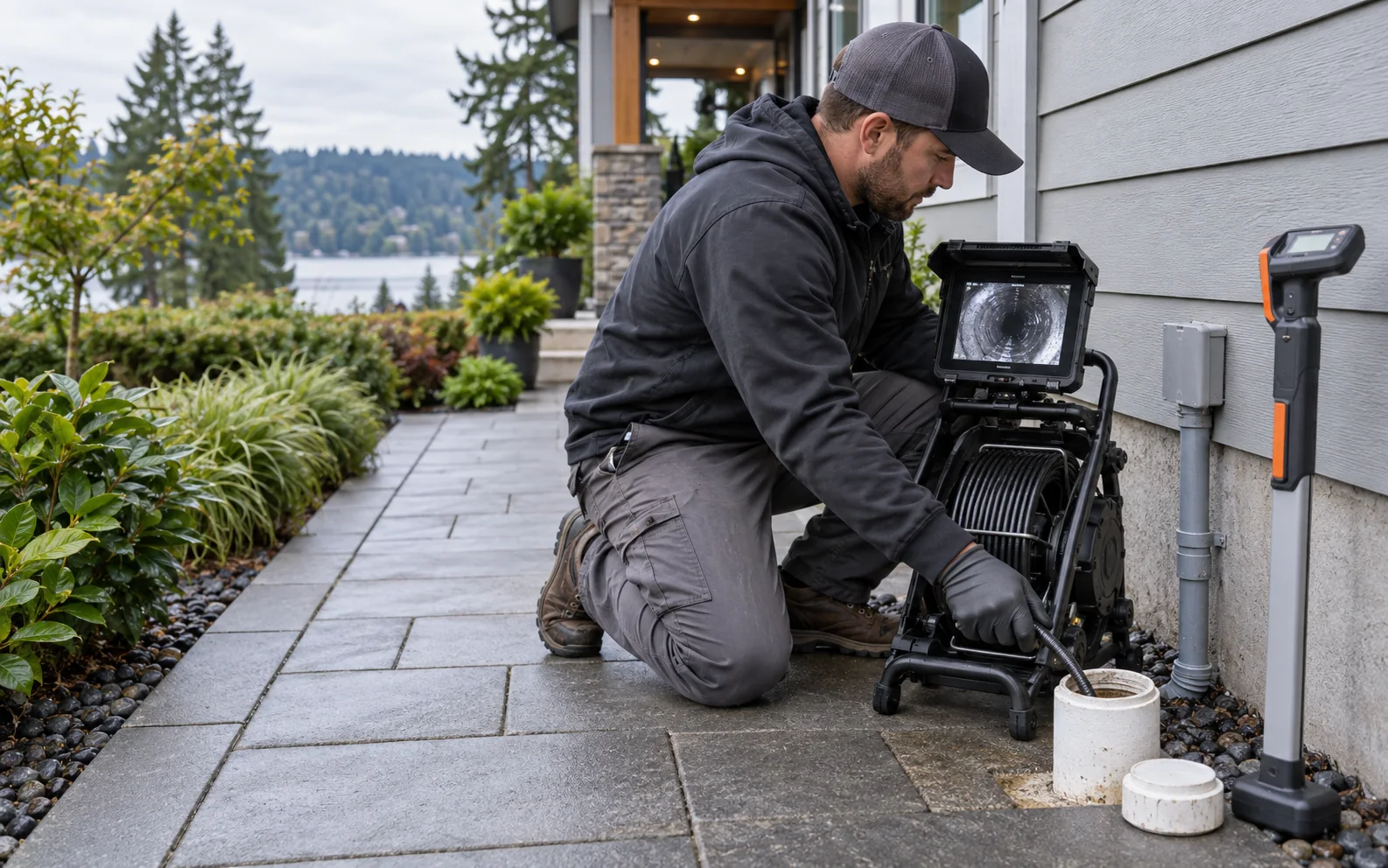
Run a camera inspection when the clog is recurring, the cable meets roots or cast-iron scale, or the line is an older clay or cast iron lateral
You hear what was found, where it was, and whether it is likely to return — before any further work is suggested.
Related Bellevue Drain Services
A sink-only clog, a kitchen line, and a shared main-line pattern are three different jobs. These pages separate them.
Most calls start with the fixture, not the diagnosis: a clogged drain in Bellevue WA might be a kitchen sink holding water, a bathroom sink that empties overnight, or a toilet needing two flushes. Searches like clogged drain repair, drain clog removal, and clogged sink or clogged toilet Bellevue all describe the same first question: is the blockage at this fixture, or is this fixture just where a deeper problem showed up first?
The useful details: the fixture, the timeline, what else changed. Compare the full list of drain services in Bellevue, or send the details through the contact page for a direct read on which service fits.
What Clogged Drain Service Costs in Bellevue
A single-drain clearing in Bellevue typically runs about $145–$300, depending on the fixture and access — through a trap, a cleanout, or a pulled toilet. The price is confirmed before work starts.
What moves the price inside that range: the fixture (a bathroom trap is faster than a toilet pull), access (a seized cleanout cap or a trap that must be cut out adds time), and recurrence (a repeat drain may justify a camera inspection, quoted separately, after you have seen what the cable brought back). If the pattern turns out to be the main line, you hear that — with options and prices — before the scope changes.
Service guidance
Choose the Right Clogged Drain Path in Bellevue
Signs It Is One Drain, Not the Main Line
One fixture is slow or stopped, everything else drains normally, there is no sewer odor, and nothing gurgles when other fixtures run. That combination keeps the job at fixture level — trap, stopper, or the first stretch of branch line.
Why the Pattern Matters More Than the Product
Shelf products promise to dissolve a clog, but location decides everything: a chemical sitting in a trap cannot reach a grease layer twenty feet down the branch, and it cannot touch roots at all. Knowing where the blockage sits, and what it is made of, is why the visit starts with the pattern.
DIY Clearing vs Professional Service
Plunging, stopper cleaning, and a hand-emptied trap are homeowner-level work. A cable near finished surfaces, in an older cast iron or clay line, or on a drain clogged twice is professional work — the wrong head or too much force can damage the pipe you were trying to save, and a recurring clog needs diagnosis, not force.
Prevention, Fixture by Fixture
Kitchen: grease goes in a can, not the sink; plates get scraped first. Bathroom: a hair catcher over the drain and a monthly stopper rinse keep the plug from forming. Toilet: nothing but toilet paper — wipes go in the trash even when the package says flushable. Laundry: a lint screen on the discharge hose keeps sludge out of the standpipe.
Service intent
Details That Guide Your Clogged Drain Visit
Where the material sits — at the fixture, in the branch, or out in the lateral — changes the tool, the time, and the price.
Most single-drain clogs start at the fixture — a stopper, a trap, or the first feet of branch lineWhen a clog keeps returning, a camera shows whether roots or scale are narrowing the line
Bellevue location context
Clogged Drain Service Area in Bellevue, WA
The map provides local contact context for Bellevue Rapid Drain. It does not determine boundaries, responsibility, response time, or serviceability.
Address on file1633 151st Ave SE Bellevue, WA 98007
Start with a plunger: cover any overflow opening, get a tight seal, and use short, sharp strokes. Hot tap water can soften a fresh kitchen grease clog, and you can lift a bathroom sink's pop-up stopper and clear the hair hanging from it. A bucket under the P-trap lets you empty and rinse the trap. Stop there if the drain stays stopped.
What should I never use on a clogged drain?
Skip chemical drain cleaners: they rarely dissolve a grease or hair blockage, they can damage pipe and finishes, and they leave a trap full of caustic water for whoever opens it next. Do not pour boiling water into PVC pipe or a porcelain fixture — heat softens joints and can crack porcelain. Never force a rented cable you cannot control; it can scratch fixtures, crack a trap, or get stuck.
When does a clog stop being a DIY job?
When the pattern changes: the same drain clogs again within weeks, two or more fixtures slow down or back up together, you hear gurgling from a toilet, a sewer smell appears indoors, or water shows up at a floor drain. Call instead of plunging — those mean the blockage is past the fixture, in the branch or main line.
What causes a clog? Does it depend on the fixture?
Yes — the material follows the fixture. Kitchen drains clog with grease cooled on the pipe wall. Bathroom sinks and tubs clog with hair bound in soap scum, at the stopper or trap. Toilets clog on wipes and foreign objects. Laundry drains load up with lint and detergent sludge. The material decides the tool, which is why the first visit question is which fixture stopped.
What does the technician actually do during a clogged drain visit?
First, the pattern: which fixture, how it changed, whether neighbors drain normally. Then a cable (auger) runs through the trap or a cleanout, head sized to the line, and whatever comes back on it is read. The fixture is flush-tested with a full volume of water. If the clog is a repeat, or the cable meets roots or scale, a camera inspection is recommended so you can see the cause.
If you clear it, will the clog come back?
It depends on what cleared means. A cable punches a path through a soft blockage but can leave the grease film or root fringe on the wall, and that layer catches debris until the drain closes again — sometimes within weeks. Wall-to-wall cleaning removes the layer itself. For a first-time clog, clearing is usually enough; for a repeat, choose a camera look and wall cleaning over a third hole in the same spot.
How much does clogged drain service cost in Bellevue?
A single-drain clearing in Bellevue typically runs about $145–$300, depending on the fixture and access: through a trap, a cleanout, or a pulled toilet. Recurring clogs that need a camera inspection are quoted separately, after you have seen what the cable found. The price is confirmed before any work starts, and if the problem is the main line, you hear that, with options, before the scope changes.
Get Clogged Drain Help in Bellevue
Share the fixture, how it changed, what you already tried, and whether it has happened before — plus the Bellevue address.